← Back to the workshop

P—01 · Furniture & eccentric builds

Rotary Pi

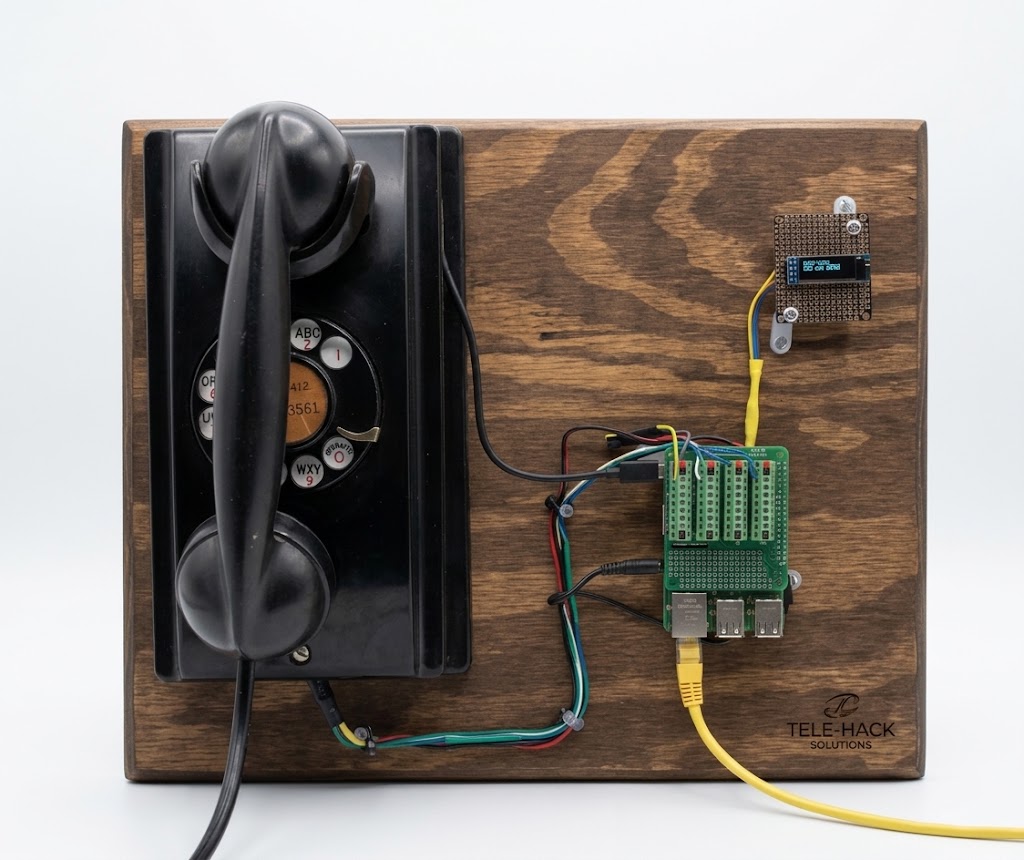
A very old rotary phone we found in our first house, gutted and rebuilt around a Raspberry Pi 1B and a little OLED screen. Same bells, same dial, brand new brain. Here's how it came together, in four phases.

Phone Found in our first house
Brain Raspberry Pi 1B
Display Small OLED screen

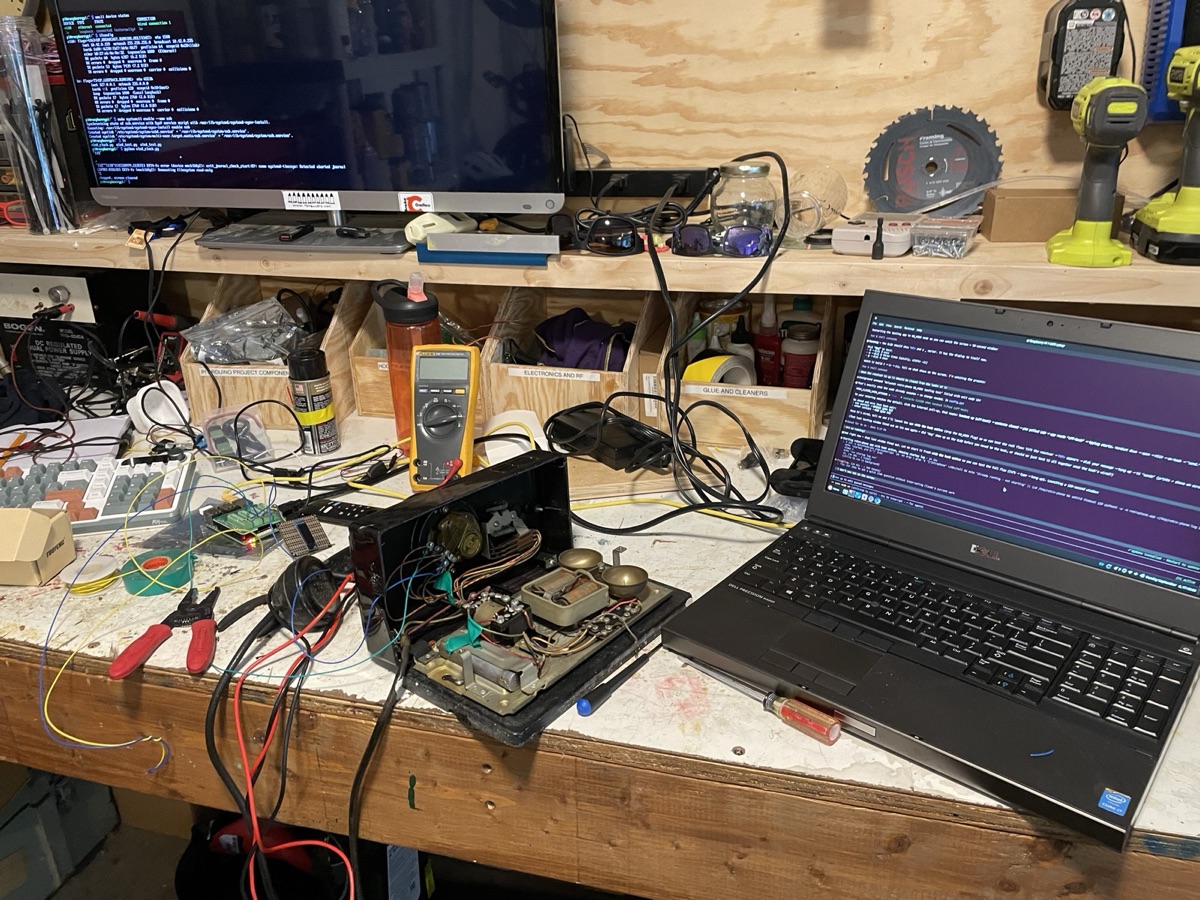
The rotary phone opened up on a workbench next to a laptop and monitor running pulse-decoding code

01

Cracking it open

Decoding the dial

First job: figure out how the rotary dial actually talks. The line sits normally closed and opens once per number, so a 1 is one pulse and a 9 is nine. I opened the phone up and wrote a little script to read those pulses and turn them back into digits.
The open phone chassis with its bells and coils, wired up with alligator clips to a Raspberry Pi for testing

02

First signs of life

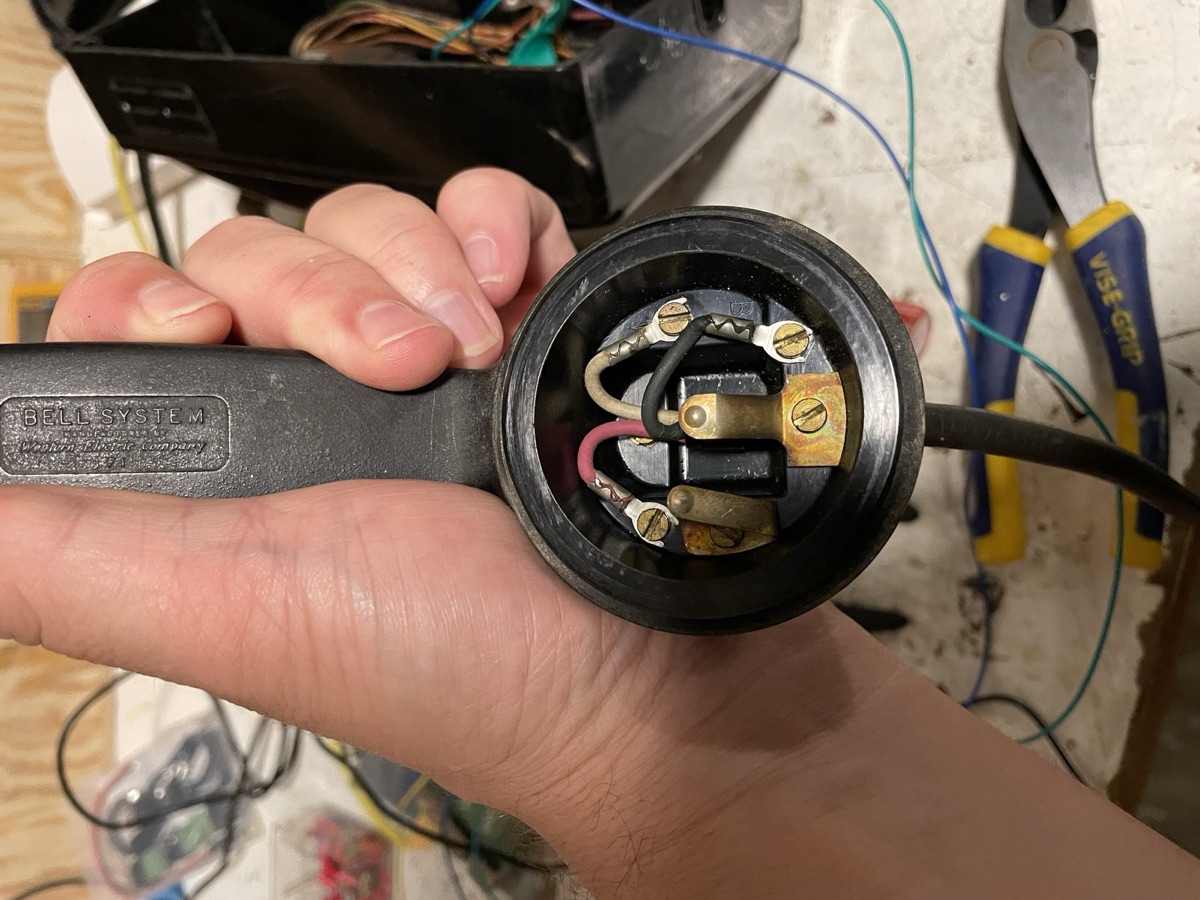
Wiring up the receiver

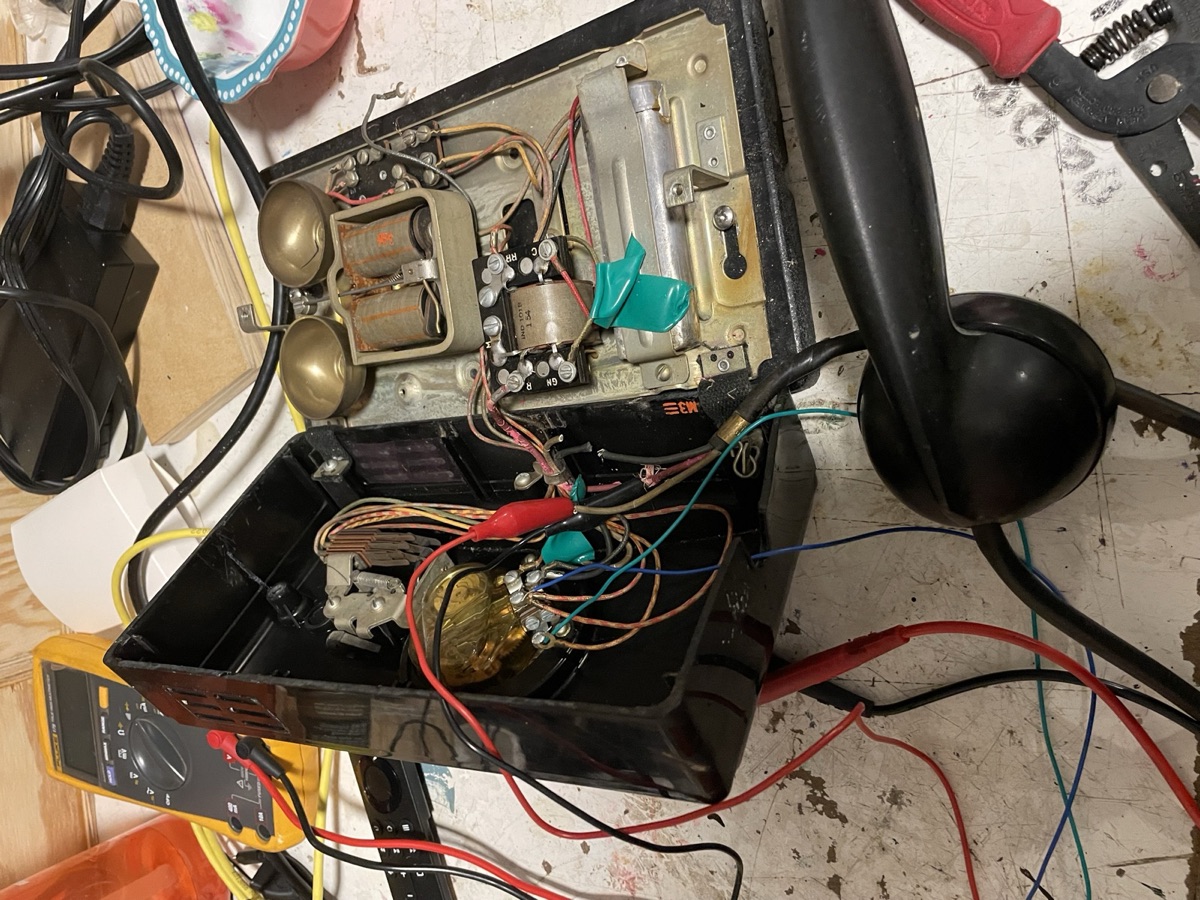
To check the receiver still worked, I clipped some alligator leads onto the guts and ran them to the audio out on the Raspberry Pi, then pushed a few test messages through. Old bells, new brain.

Close-up of the Bell System handset opened up to show the receiver terminals and wiring

03

The handset

New wire in the handset

The original handset wiring was dry-rotted and dragging down the sound quality, so it got torn out and replaced. A small fix that made a big difference.

The finished rotary phone mounted on a stained plywood board and wired to a Raspberry Pi

04

On the wall

Mounted up

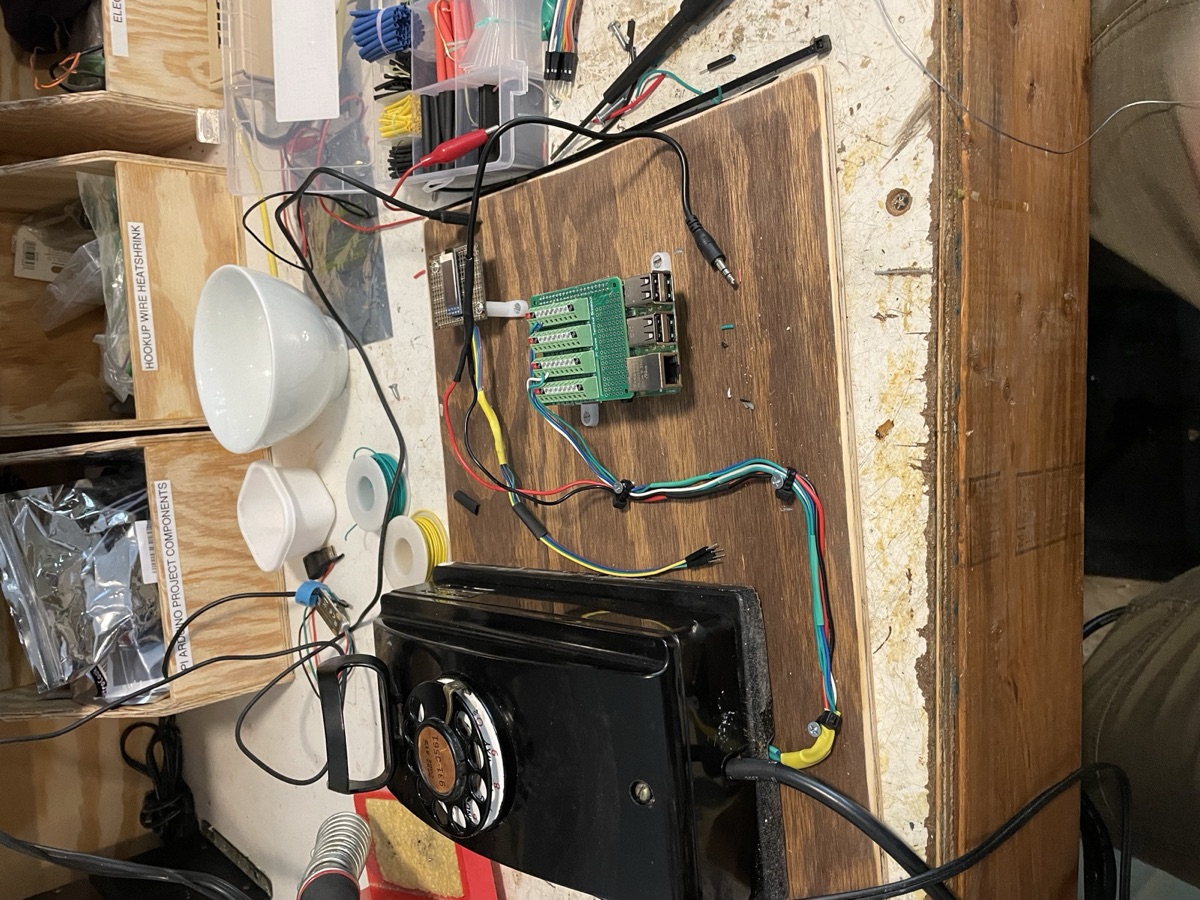
Finally I screwed it to a spare piece of stained plywood from the garage, Raspberry Pi and all, so the whole thing can hang on the wall and actually get used.

The finished Rotary Pi — a vintage rotary wall phone rebuilt with a Raspberry Pi and OLED display

05

The finished phone

Back in service

Old dial, old bells, a Raspberry Pi doing the thinking behind them. A classic gem brought back to life.

← Back to the workshop